TMJ Treatment for Jaw Pain and Clenching: What Helps, Including Botox
Most jaw pain responds to simple, conservative care. Here's what helps, where Botox fits in, and when it's time to have us take a look.
Waking up with a sore jaw. A click every time you yawn. Headaches that seem to start right in front of your ears. If any of that sounds familiar, you could be dealing with a TMJ problem, and you're far from alone.
Stress has a way of settling into your jaw, and the stretch between the holidays and tax season gives it plenty of chances. The good news is that most jaw pain responds to simple, conservative care. Botox can help some people too, with a few honest caveats.
What is TMJ, exactly?
TMJ stands for temporomandibular joint. You have two of them, one on each side, just in front of your ears. They're the hinges that let you talk, chew and yawn.
When people say "I have TMJ," they usually mean a problem with those joints or the muscles that move them. Dentists often call that TMD, short for temporomandibular disorder. Same idea, more letters.
What are the common signs?
- Aching in your jaw, face or around your ear
- Clicking, popping or grating when you open or close your mouth
- A jaw that feels tight, gets stuck, or won't open all the way
- Headaches, especially in the morning or around your temples
- Teeth that look worn, flattened or chipped
- Pain when you chew
Some of these overlap with other problems, like a sinus infection, an ear issue or a cracked tooth. That's why we don't guess. An exam sorts it out.
What causes TMJ pain?
Often there isn't one single cause. These are the usual suspects:
- Clenching and grinding. Lots of people do it in their sleep and have no idea until a partner hears it or we spot the wear on their teeth.
- Stress. For many of us, tension goes straight to the jaw muscles, day or night.
- Joint or bite issues. Arthritis, an old injury or changes in how your teeth fit together can play a part.
- Everyday habits. Chewing gum all day, biting your nails or resting your chin on your hand all put extra work on the joint.
How is TMJ treated?
Most TMJ treatment starts simple and conservative. Mild symptoms often ease with self-care and a little time. Here's what that usually looks like, roughly in the order we'd consider it:
- Give your jaw a break. Choose softer foods for a while, take smaller bites and skip the gum. Warm or cold compresses can help sore muscles.
- Catch the daytime clench. Lips together, teeth apart, jaw relaxed. That's your jaw's resting position. Checking in with it a few times a day helps more than you'd think.
- Use over-the-counter pain relievers for short-term relief. Only if they're safe for you. Ask your doctor or pharmacist if you're not sure.
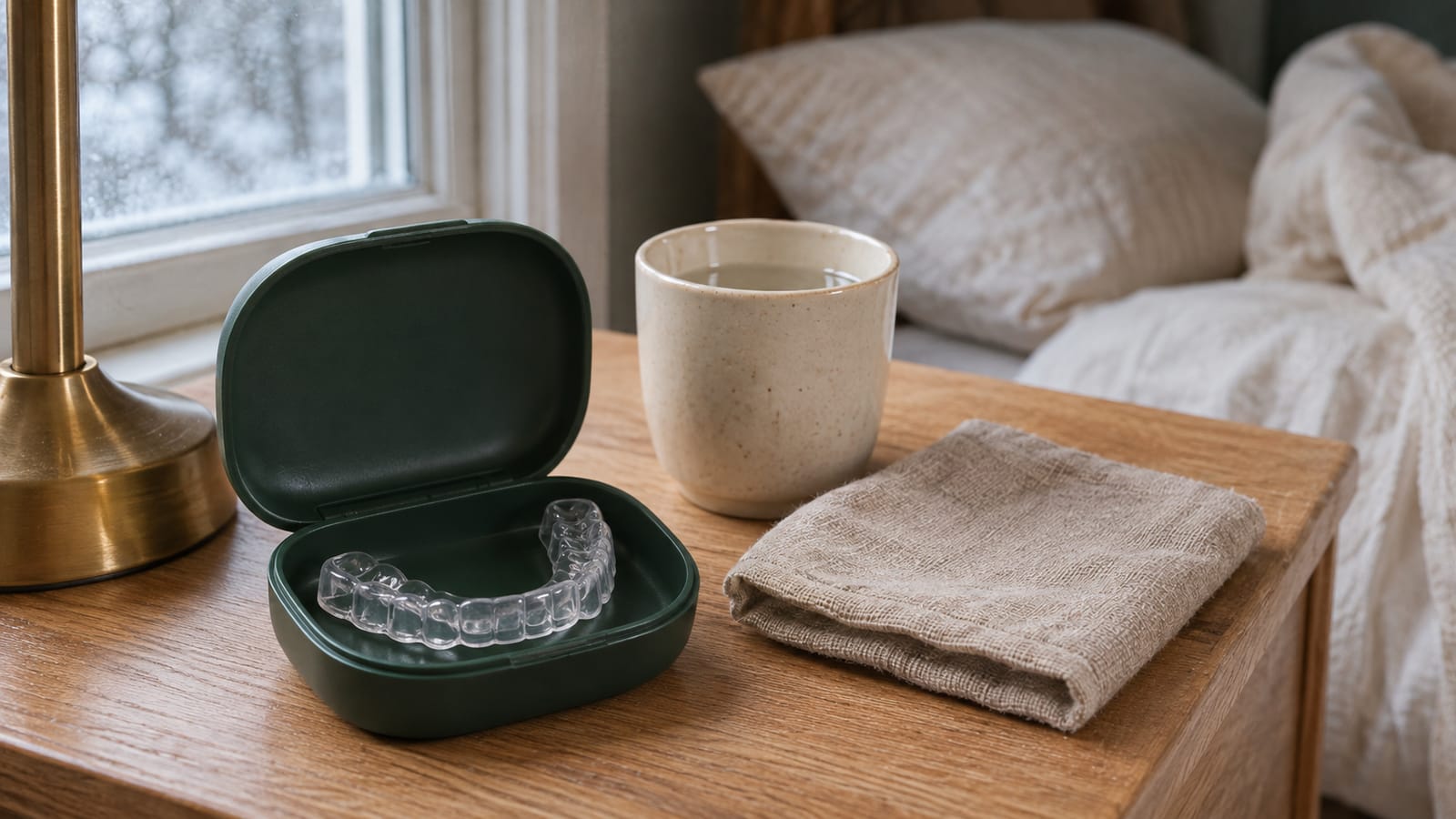
- Wear a custom nightguard. If you grind or clench at night, a guard made from impressions of your teeth puts a cushion between your top and bottom teeth and helps protect them from wear. Drugstore boil-and-bite guards are bulkier and can fit loosely.
- Work on the cause. Sometimes that means stress management, physical therapy or working with your physician. Some cases need a referral, and we'll tell you if yours does.
TMJ therapy is one of the services we offer at our Springdale office. You can see the rest on our services page.

Can Botox help with TMJ?
For some people, it can. Botox is a purified protein that relaxes the muscles it's injected into. For TMJ pain, it's placed into the chewing muscles, usually the masseter along the side of your jaw and sometimes the temporalis near your temple. The goal is to calm muscles that are working overtime from clenching or grinding.
A few honest notes before you get your hopes up:
- It isn't a cure. Botox treats muscle tension. It doesn't fix a problem inside the joint, arthritis or a bite issue.
- It wears off. The effect typically fades over a few months, so people who benefit usually come back for repeat treatments.
- It's an off-label use. Botox isn't FDA approved specifically for TMJ disorders, though dentists and physicians do use it this way. Research on how well it works is still mixed.
- Not everyone is a good candidate. We decide that together at an exam, after we've looked at what's causing your pain and what you've already tried.
- Coverage varies. Insurance plans treat Botox differently, so we'll check yours before any treatment.
Botox is part of our facial esthetics services, placed with a dentist's precision and a dentist's understanding of how the jaw works. If we think another approach makes more sense for you, we'll say so.
When should you see a dentist about jaw pain?
Mild soreness after a stressful week may settle down on its own. It's time to call us if:
- The pain lasts more than a couple of weeks or keeps coming back
- Your jaw gets stuck open or closed
- You can't open your mouth all the way
- The pain is getting worse or makes it hard to eat
- You notice chipped, cracked or worn teeth
If your jaw is locked or you're in a lot of pain, don't wait it out. We offer same-day emergency care. Every jaw is different, and a blog post can't diagnose yours, so the best next step is having us take a look.
Common questions
Will TMJ go away on its own?
Sometimes. Mild cases often improve with rest, softer foods and less clenching. If your symptoms stick around for more than a couple of weeks or keep returning, it's worth an exam.
How long does Botox for TMJ last?
The effect typically lasts a few months before it wears off. Results vary from person to person, and some people don't get much relief at all. We'll talk through realistic expectations at your exam.
Is a drugstore nightguard good enough?
For some people, it works as a short-term fix. Store-bought guards are bulkier and fit less precisely than a custom guard made for your teeth. If any guard makes your jaw pain worse, stop wearing it and let us know.
Does jaw clicking mean something is wrong?
Not always. A painless click is pretty common. Clicking that comes with pain, locking or trouble opening your mouth is worth having checked.
Start with a conversation
You don't have to figure out your jaw pain on your own, and asking about it doesn't commit you to any treatment. Come in, tell us what you've noticed, and we'll take a look. You'll find us on Ray Norrish Drive in Springdale, across from Showcase Cinema de Lux.